

General
WhatsApp and Discord Stock Scams: 15 Red Flags That Signal Pump-and-Dump Fraud
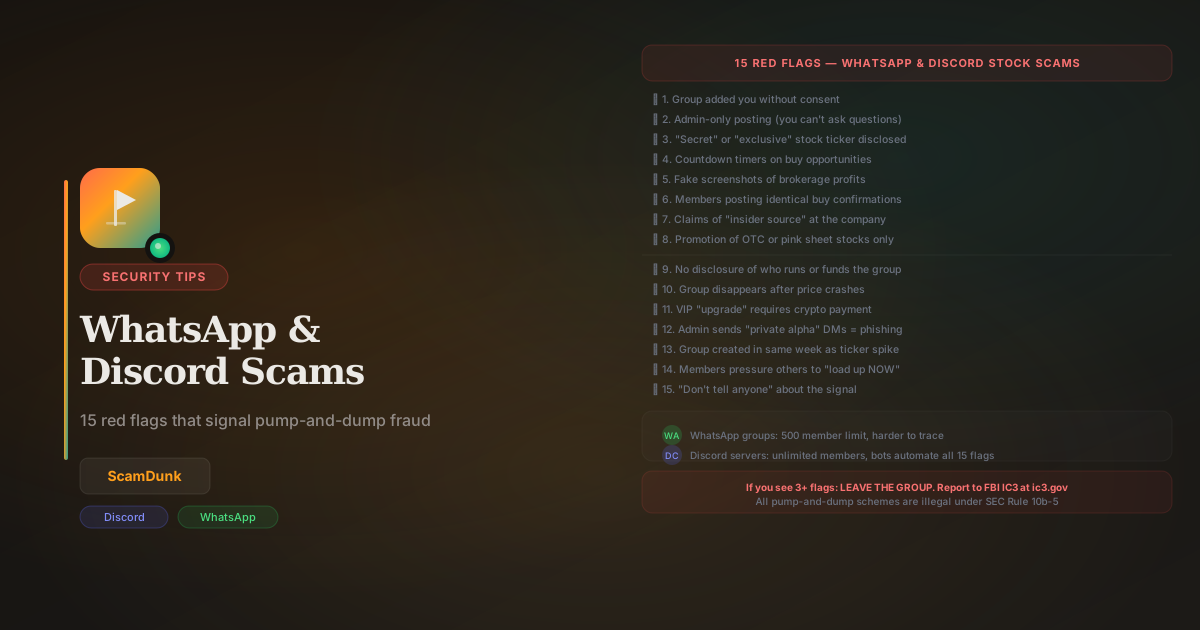
This guide identifies the 15 warning signs that distinguish legitimate trading communities from manipulation operations.
What Are WhatsApp and Discord Stock Scams?
WhatsApp investment groups and Discord trading servers function as distribution infrastructure for coordinated pump-and-dump schemes. Between 2021 and 2024, FINRA documented a 312% increase in complaints related to messaging app investment fraud. The pattern is consistent: operators add targets to private groups, promote worthless securities using urgency and social proof, then dump shares on members who follow the recommendations.
This guide identifies the 15 warning signs that distinguish legitimate trading communities from manipulation operations.
Why Scammers Use WhatsApp and Discord for Stock Manipulation
Platform Architecture Enables Fraud
The technical features that make these platforms useful for legitimate communication also serve fraudsters:
WhatsApp fraud infrastructure:
- End-to-end encryption prevents third-party monitoring of group activity
- Group capacity of 1,024 members enables efficient distribution
- Broadcast lists reach unlimited contacts with no recipient visibility
- No public record exists for regulators to identify manipulation patterns
- Message forwarding spreads picks across multiple coordinated groups
Discord fraud infrastructure:
- Tiered server access creates artificial scarcity ("VIP channels" for premium members)
- Visible member counts generate social proof
- Real-time chat creates FOMO as members discuss "runners" and gains
- Server history can be deleted to eliminate evidence
- Bot accounts inflate perceived community size
Both platforms share a critical characteristic: securities regulators cannot monitor activity effectively, and retroactive investigation is nearly impossible. This enforcement gap is structural, not temporary.
The 15 Red Flags of WhatsApp and Discord Stock Scams
Red Flag 1: Unsolicited Group Addition
What it means: You were added to a WhatsApp investment group or Discord server without requesting access.
Why it matters: Legitimate trading communities do not add strangers. Your phone number or account was obtained from data brokers, compromised databases, or previous scam victim lists. Pump-and-dump operators purchase contact lists segmented by demographics indicating interest in stock gains.
Your presence in the group means you were targeted as a potential mark, not selected for trading expertise.
Action: Leave immediately without engaging.
Red Flag 2: Generic Aspirational Group Names
What to look for: "Stock Market VIP Alerts," "Investment Tips 2026," "Millionaire Traders Club," "Profit Signals Premium"
Why it signals fraud: Scam groups use names designed to attract curious members through aspiration and social proof. Legitimate communities have specific names reflecting focus areas, founding members, or methodologies. Generic names serve marketing, not substance.
Red Flag 3: Questions Are Discouraged or Punished
What happens: Moderators ignore substantive questions, claim methods are "proprietary," remove members who persist, or flood chat with new picks to bury inquiries.
Why it matters: Questions threaten pump-and-dump operations by encouraging independent verification. Scam groups exist to distribute picks without scrutiny. Legitimate communities welcome questions because education creates value for members.
Test: Ask about past performance, trading methodology basis, or verification of specific claims. The response reveals intent.
Red Flag 4: Unverifiable Gain Screenshots
What you see: Portfolio screenshots showing 500% returns, individual trades gaining $50,000, account balances in six or seven figures.
Why it proves nothing:
- Screenshots can be photoshopped in minutes
- Paper trading accounts show no real money at risk
- Real accounts from different time periods can be selectively shown
- Screenshots can be borrowed from other traders entirely
- Winning trades can be real but represent survivorship bias (losses hidden)
Reality check: Legitimate traders share wins AND losses. They discuss risk management. They explain when analysis failed. Groups showing only wins fabricate performance.
Red Flag 5: Every Pick Uses Urgency Language
Pattern to recognize:
- "This is about to explode"
- "Get in now before it's too late"
- "Already up 40% today, just getting started"
- "News dropping tomorrow, last chance"
- "Moving fast, don't miss this"
Psychological function: Urgency overrides analytical thinking. When you believe time is limited, you skip verification steps that would reveal manipulation.
Legitimate trading ideas based on fundamental value, technical setups, or catalyst timing can be explained without artificial urgency. If every recommendation requires immediate action, the urgency is manufactured to prevent analysis.
Red Flag 6: Risk Management Is Never Discussed
What's missing:
- Position sizing guidance
- Stop loss levels
- Maximum portfolio allocation percentages
- Scenario analysis for adverse outcomes
- Discussion of what could go wrong
Why absence matters: Professional traders discuss risk constantly because managing downside is how capital survives. Pump-and-dump groups never discuss risk because acknowledging it undermines urgency narratives and reduces buying pressure.
If moderators told you to risk only 2% of portfolio on each pick, you would buy fewer shares—exactly what manipulators cannot afford during the pump phase.
Red Flag 7: Recommendations Are Always Obscure Tickers
What you notice: Every pick is a stock you have never heard of—penny stocks, OTC securities, small-cap companies with no analyst coverage.
Why this pattern exists:
- Small float moves on limited volume
- No institutional investors monitoring for manipulation
- Limited public information prevents independent verification
- Lack of liquidity amplifies price moves
- No analyst coverage means no external validation
Groups that never recommend researched, liquid securities are selecting for manipulability, not opportunity.
Red Flag 8: The Group Is Free or Suspiciously Cheap
Pricing pattern: Free access or "premium" tiers at $20-50/month for "VIP signals"
Business model analysis: Legitimate trading education and signal services charge meaningful fees because their revenue comes from satisfied subscribers who renew. Their business model is membership, not trading.
Free groups and cheap "premium" access have different economics. They profit from the stocks they recommend, not subscriber fees. Your subscription fee is cover; real revenue comes from dumping shares on followers.
Question to ask: If this service identifies stocks that consistently gain 50-200%, why charge $20/month instead of $2,000/month?
Red Flag 9: Moderators Claim Insider Knowledge
Common claims:
- "My contact at the company told me..."
- "I have a source on the deal team..."
- "Someone at FDA leaked that approval is coming..."
- "This is moving on news that isn't public yet..."
Dual function:
- Creates impression of exclusive access justifying the pick's value
- Provides excuse for why catalyst cannot be independently verified
Legal reality: Trading on material nonpublic information is securities fraud. People with actual insider knowledge do not share it in WhatsApp groups with hundreds of strangers. If moderators claim insider sources, they are either lying about having information or lying about its materiality.
Red Flag 10: Success Stories Come From New or Unverifiable Members
Pattern to identify:
- Testimonials from accounts that joined recently
- Celebratory posts from names you do not recognize
- "Winners" who never participate in discussion beyond posting gains
- Same few accounts posting all success stories
Operational mechanics: Scam operations seed positive testimonials using controlled accounts or newly added members who are themselves victims or coordinated participants.
Legitimate communities show the same members over time developing track records. If you cannot trace a success story to an established member with history in the group, treat it as fabricated social proof.
Red Flag 11: Exit Strategy Is Never Specified
What's missing:
- Profit-taking levels
- Trailing stop guidance
- Conditions that would invalidate the trade
- Target price ranges
- Time horizon for holding
Why this matters: Buying is half a trade. Knowing when and how to sell is the other half. Pump-and-dump operators need members holding while they dump shares. If moderators specified 20% gain targets with trailing stops, members would exit before the peak, eliminating the liquidity scammers need.
Test: Ask "When should I take profits? What would make this trade invalid?" If these questions go unanswered or deflected, you are being positioned to hold shares during the dump phase.
Red Flag 12: The Group Emphasizes Secrecy
Common demands:
- "Don't share this pick outside the group"
- "This information is for members only"
- "Keep our community private"
- "What we discuss here stays here"
Function of secrecy: These requests serve operational security for the scam, not protection of legitimate edge. Secrecy discourages members from discussing picks with outsiders who might identify manipulation.
Reality: Legitimate trading ideas are not harmed by external discussion. If a stock has genuine catalysts and reasonable valuation, more people knowing about it does not diminish opportunity. Secrecy demands indicate the recommendation cannot withstand scrutiny.
Red Flag 13: Multiple Stock Picks Every Day
Volume pattern: Three to ten recommendations per day, sometimes more
Why this indicates fraud: Quality trading ideas are rare. Professional traders might establish a handful of positions per month based on extensive research. High-frequency recommendations serve multiple purposes:
- Creates constant engagement keeping members checking the group
- Provides plausible deniability ("some work, some don't")
- Generates activity across multiple coordinated positions
- Prevents members from conducting due diligence on any single pick
If a group consistently produces multiple daily picks, they are manufacturing activity, not conducting research.
Red Flag 14: Past Performance Is Never Referenced
What to look for: Search group history for discussion of previous recommendations. What happened to stocks picked last month? Last quarter?
Why avoidance matters: Scam groups never conduct post-mortems because results would reveal the pattern: initial pumps followed by collapses. Moderators keep attention on current picks and future opportunities, never past performance.
Contrast: Legitimate trading communities analyze historical trades extensively. Learning from wins and losses is how methodology improves. If past recommendations are never discussed, there is nothing worth discussing.
Red Flag 15: No Independent Verification Exists
Test to perform: Before acting on any pick, search for the stock outside the group:
- SEC filings and company press releases
- Mainstream financial news coverage
- Independent analyst reports
- Trading forum discussions from other communities
What absence means: If information about the stock exists only within the group that recommended it, the "catalyst" is manufactured promotion, not legitimate news. Real company developments generate coverage across multiple sources because journalists and analysts independently verify material information.
The absence of external validation is the ultimate red flag. If the opportunity were genuine, someone else would have noticed it.
Platform-Specific Warning Signs
WhatsApp-Specific Red Flags
Message forwarding indicators: WhatsApp displays "Forwarded many times" on messages sent across multiple groups. Stock alerts with this indicator are being blasted simultaneously, signaling coordinated pump operations.
Admin-only messaging: Groups configured so only admins can send messages prevent members from sharing due diligence findings or warnings. This allows only the pump narrative to circulate.
Multiple simultaneous additions: If your number was added to several investment groups within days, you are on scammer targeting lists sold to multiple operators.
Discord-Specific Red Flags
Server creation date: Check server info for creation date. Servers created within months that claim thousands of members likely inflated numbers through bot accounts or cross-promotion from previous scam operations.
Win channel analysis:
- Same few accounts posting all wins
- Winning trade timestamps that precede pick announcements (fabricated after-the-fact claims)
- No losing trades ever mentioned
Moderator anonymity: Check if moderators have public trading histories, LinkedIn profiles, or verifiable identities. Anonymity combined with other red flags suggests operators avoiding future identification.
What to Do If You Encounter These Red Flags
If You Are in a Suspicious Group
Immediate action:
- Leave the group without engaging or arguing
- Block numbers or accounts that added you
- Report through platform reporting features
- Screenshot group name, moderator names, and stock picks before leaving
Why not to warn others: Moderators will remove dissent, and engagement keeps you on their radar for future targeting.
If You Already Acted on a Pick
Position assessment:
- If you have gains: Consider exiting rather than waiting for more. Pump-and-dump peaks are impossible to time. Waiting typically converts gains to losses.
- If you have losses: Evaluate whether holding makes sense based on company fundamentals independent of group promotion. In most cases, fundamental value is near zero, making recovery unlikely.
How to Report Stock Manipulation
SEC complaint: File at sec.gov/tcr. Include screenshots of group activity, stock picks with timestamps, and your experience.
FINRA complaint: File at finra.org/investors/have-problem. Their fraud hotline specifically handles social media and messaging app scams.
Why reporting matters: Individual reports rarely trigger immediate enforcement, but agencies build larger cases from multiple reports about the same operations. Your documentation contributes to pattern recognition.
Frequently Asked Questions About WhatsApp and Discord Stock Scams
Can Legitimate Trading Groups Exist on These Platforms?
Yes. Many private communities of experienced traders use WhatsApp and Discord for discussion. The distinction lies in presence or absence of the red flags documented above. Legitimate groups:
- Do not add strangers without consent
- Welcome questions and critical analysis
- Discuss risk management and position sizing
- Reference historical performance honestly
- Do not use urgency language on every recommendation
What If I Know the Moderator Personally?
Personal acquaintance does not eliminate fraud risk. Many scams operate through trusted intermediaries who are themselves victims or unknowing participants. Social engineering often exploits existing relationships.
Evaluate the group based on its operational characteristics, not your relationship with the person who added you.
What If Some Picks Actually Work?
Pump-and-dump operations often include legitimate picks or statistically lucky wins to build credibility before the major scam. The question is overall pattern, not individual results.
Even broken clocks are correct twice per day. Occasional wins do not validate a fraudulent operation.
Are Paid Groups Safer Than Free Groups?
Not necessarily. Some operations charge fees to increase perceived legitimacy and offset operational costs. Payment alone does not verify intent.
Apply the same red flag analysis regardless of whether the group is free or paid.
What About Groups That Claim to Be "Educational"?
Education framing can be cover for the same manipulation. If the education consistently leads to specific stock recommendations, analyze those recommendations using the same criteria.
Legitimate education teaches methodology and analytical frameworks. Scam education teaches you to buy specific stocks the operators already hold.
Conclusion: Pattern Recognition Is Your Defense
WhatsApp and Discord have become infrastructure for a generation of pump-and-dump schemes. The platform features users value—privacy, real-time communication, community tools—also serve manipulators.
Your defense is systematic pattern recognition. The 15 red flags documented here identify consistent markers separating fraud from legitimate community. No single flag is definitive, but combinations demand caution. Three or more flags in combination should trigger immediate exit.
The investment opportunities that build long-term wealth do not require secret groups, urgent decisions, or obscure stocks. They do not depend on insider claims that cannot be verified or performance that cannot be traced.
If you are evaluating a group, apply these criteria methodically. If multiple tests fail, no amount of apparent success or social pressure justifies remaining.
Protecting yourself from manipulation is the prerequisite for accessing legitimate returns. The best trade is the scam you never entered.