

Security Tips
Unsolicited Stock Tips: Spotting SMS, Email, and Cold Call Scams
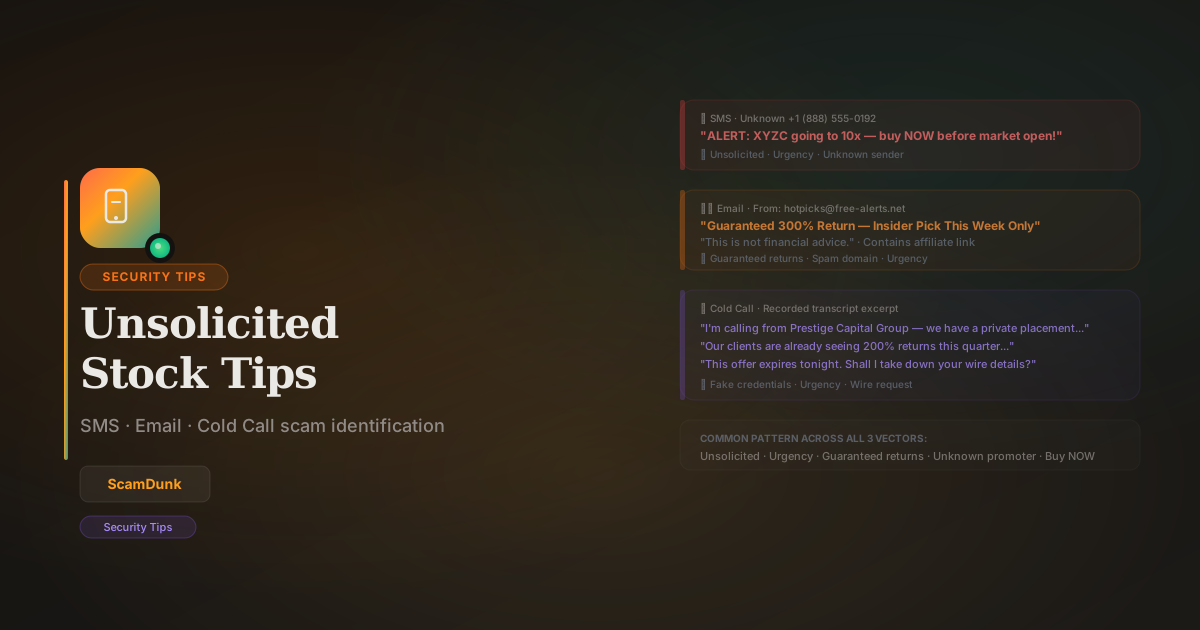
Unsolicited investment tips are often scams designed to exploit unsuspecting investors. This blog post delves into the mechanics of SMS, email, and cold call scams, highlighting their operational structures and red flags to watch for. With billions lost annually, understanding these tactics is crucial for protecting your investments.
An investment tip you did not ask for is not an opportunity. It is a targeting event. Someone obtained your contact information, assessed you as a viable target, and deployed a message designed to bypass your analytical judgment. The delivery channel — text message, email, phone call — determines the psychological mechanism. The underlying fraud is identical across all three.
The SEC estimates that unsolicited investment promotion generated $3.2 billion in retail investor losses in 2024. The majority of that activity flows through SMS, email, and telephone. Understanding how each channel works operationally changes how you recognize and respond to it.
Why Unsolicited Stock Tips Are Always Suspect
Definition: An unsolicited stock tip is any investment recommendation delivered to a recipient who did not specifically request it through any communication channel — including but not limited to text message, email, direct mail, phone call, fax, voicemail, or automated message.
The operational logic of unsolicited promotion is straightforward: legitimate investment opportunities do not require mass broadcasting to strangers. Operators who have acquired shares in a stock at low prices need buyers to elevate the price before they can sell. Strangers are buyers. The unsolicited message is the recruitment mechanism.
No regulatory framework permits this activity without disclosure. Any person or entity that receives compensation to promote a security must disclose that compensation in the promotion itself, regardless of the channel. No unsolicited stock tip message — from a sophisticated "investment newsletter" to a mass-texted SMS alert — complies with this requirement in practice.
SMS Stock Scams: How Text Message Manipulation Works
The Operational Structure
SMS pump-and-dump campaigns operate at industrial scale. Data brokers sell phone number lists segmented by age, income bracket, and financial interest indicators. A coordinated SMS campaign can reach hundreds of thousands of recipients within hours.
Operators purchase these lists, acquire positions in the target stock, then trigger automated SMS sends timed to coincide with market hours. The resulting buying pressure from a fraction of recipients elevates the price. The operator sells. The remaining recipients who bought hold a stock in free fall.
The Three SMS Scam Formats
Format 1: The Accidental Message The recipient receives what appears to be a misdirected personal text: "Hey, didn't you say you wanted to know about XYZ Corp? My contact says it's going to triple this week. Don't tell anyone." The framing implies exclusivity and accident. The message was not misdirected. It was engineered to feel like insider information accidentally received, designed to trigger curiosity and the fear of missing out.
Format 2: The Alert Service The message presents as a subscription alert: "STOCK ALERT: $TICKER showing breakout pattern. 72-hour window. Reply STOP to unsubscribe." Recipients have not subscribed to anything. The opt-out language mimics legitimate marketing to create an impression of operational legitimacy. No legitimate investment alert service uses cold SMS lists.
Format 3: The Chinese AI Variant (2024-2025) A newer pattern: an SMS conversation begins with what appears to be a wrong-number message from a non-English speaker. Over multiple exchanges, the conversation turns friendly. Eventually, the new "contact" mentions an investment opportunity — typically in cryptocurrency or a specific stock. These are scripted, often AI-assisted multi-day social engineering sequences designed to build trust before the pitch. The SEC issued a specific investor alert on this pattern in 2024.
SMS Red Flags
- Message arrives from a number you do not have saved
- No mention of who is sending the message or why you are receiving it
- Specific ticker symbol with a percentage gain prediction
- "Reply STOP" language from a number that has never contacted you before
- Message framing implies you are receiving information not meant for you
- Message references a "friend" or "contact" whose identity is unverifiable
- Persistent follow-up messages if you do not respond (automated sequence indicator)
What to Do with SMS Stock Tips
Delete the message without responding. Do not reply "STOP" — this confirms your number is active and will generate more messages. Do not call back the sending number. Block the number after deleting.
If you receive repeated SMS stock promotion from different numbers, report to the FTC at reportfraud.ftc.gov and to the SEC at sec.gov/tcr.
Email Stock Scams: The Industrial Distribution Layer
Why Email Remains the Highest-Volume Channel
Despite being the oldest digital fraud channel, email remains the highest-volume distribution mechanism for stock promotion. FINRA's Market Regulation unit estimated that coordinated stock promotion email campaigns sent to more than 2 billion individual addresses occurred in 2024. The economics favor email: list cost is minimal, sending costs approach zero, and even a 0.1% response rate generates meaningful buying pressure.
Email provider spam filtering has improved substantially, but manipulation operators continuously evolve their technical methods to evade filters: rotating sending domains, using legitimate email infrastructure (compromised accounts, paid services), varying content patterns, and segmenting sends by geography to avoid triggering velocity filters.
The Four Email Stock Promotion Formats
Format 1: The Investment Newsletter A formally designed email, often with a professional header, editor byline, and publication name ("The Insider Report," "Profit Intelligence Daily," "Stock Alert Weekly"). These newsletters include multi-paragraph analysis, charts, and official-looking disclosures buried in fine print. The disclosures, when they exist at all, reveal that the "newsletter" received cash or stock compensation to feature the company.
Format 2: The "Hot Tip" Forward An email formatted to look like a forwarded message from one person to another: "FWD: FWD: FWD: My buddy in [city] works for a hedge fund. He says $TICKER is about to get acquired. Pass it along." The forwarding chain is fabricated. The "buddy" does not exist. The acquisition rumor is manufactured. The forwarding aesthetic is designed to create the impression of organic, peer-to-peer information spread.
Format 3: The Boiler Room Email Blast Direct, high-urgency promotional copy: subject lines like "URGENT: $TICKER Set to EXPLODE — Act Before 9:30 AM," body copy consisting entirely of percentage gain claims, urgency language, and a call to action with no analysis. These are the lowest-sophistication campaigns and also the highest-volume ones. They are effective because they reach millions of recipients and require only a small fraction to act.
Format 4: The Regulatory Mimicry Email An email that mimics SEC or FINRA communications: formal government-agency aesthetic, mention of regulatory filings, use of phrases like "required disclosure" or "investor notification." These emails are designed to create an impression that a regulatory body is endorsing or highlighting the investment. Regulatory agencies do not send unsolicited investment recommendations to retail investors under any circumstances.
The Mandatory Disclosure Test
Any email promoting a specific security must include a clear disclosure of compensation if the sender received payment. This disclosure is required by SEC Rule 10b-5 and must be clear and conspicuous — not hidden in fine-print footers in font smaller than 8 points.
Apply this test to any investment promotion email:
- Search the email for any disclosure language: "We were paid," "Compensated by," "We hold a position in," "This is a paid advertisement."
- If disclosure exists, read it carefully. Note who paid, how much, and in what form (cash, stock, warrants).
- If no disclosure exists, the promotion is operating in violation of securities law.
The presence of a disclosure does not make the investment legitimate. It means the promoter followed minimum legal requirements. The underlying investment may still be fraudulent. But the absence of disclosure is a definitive signal that the promoter is concealing their financial interest.
Email Red Flags
- Sender domain is unrecognized and does not match the "publication" name
- Subject line contains urgency language and a specific ticker or percentage
- Email was not opted into via a subscription you remember creating
- The "unsubscribe" link goes to a URL with an unusual domain
- Mandatory disclosure is absent, buried in grey-on-grey fine print, or states compensation of $0 (a common false disclosure)
- Price targets and gain predictions are specific but the analytical methodology is absent
- "Editor" or author byline is not searchable outside the email itself
- Company described has no verifiable operating history
Cold Call Stock Scams: The High-Pressure Voice Channel
Why Cold Calls Still Work
Voice communication creates a psychological dynamic that text-based promotion cannot replicate: real-time pressure, social obligation, and the difficulty of terminating a human conversation. Cold call stock scams persist because conversion rates — the percentage of recipients who take the recommended action — are significantly higher than email or SMS. The higher cost of telephone-based operations is offset by better targeting and higher per-call conversion.
Definition: A cold call stock scam involves an unsolicited phone call from an individual or automated system promoting a specific security without prior relationship, without required disclosure, and often without registration as a licensed broker-dealer or investment adviser.
The Boiler Room Structure
Classic boiler room operations employ teams of callers working scripted pitches from phone lists. The callers may be:
- Unlicensed individuals working on commission per account opened or per investment made
- Registered brokers at small, often offshore-connected broker-dealer firms
- Automated dialing systems (robocalls) playing recorded promotions
- Offshore call center workers reading scripts they do not fully understand
Regardless of the structure, the operational goal is identical: get the target to open a brokerage account, fund it, and purchase the promoted security before they have time to research it independently.
The Three Cold Call Script Structures
Script 1: The Research Preview "I'm calling from [firm name] and we've done extensive research on a company that I think is going to be very significant for you. I can't give you all the details over the phone — are you near a computer so I can send you our research report?" The goal of the first call is not to sell the stock. It is to establish a relationship and get permission to follow up. Subsequent calls increase pressure. By call three or four, the target has spent time with the "relationship" and the sunk cost of that time makes saying no harder.
Script 2: The Referral Name Drop "A mutual friend of ours, [first name only], suggested I reach out. He said you were someone who appreciated good investment ideas." The first name is common and unverifiable. The mutual friend does not exist. But name-dropping a plausible referral source bypasses the immediate suspicious response most people have to unsolicited calls. The caller did not claim to know the "friend" well enough to identify them fully — plausible deniability while the fictional relationship creates false trust.
Script 3: The Exclusivity Pitch "I'm not supposed to be calling people outside our client network, but this opportunity is too good not to share. We have early access to a company that is about to announce something major. This is the last call I'm making today — after this, I can't offer you this price." Manufactured scarcity, fake insider access, and time pressure combine to override the analytical deliberation that would lead most targets to say no. The urgency prevents research.
Cold Call Red Flags
- Caller cannot provide a FINRA registration number immediately when asked
- Firm name is not verifiable on BrokerCheck
- Caller claims information is exclusive, insider, or time-limited
- First call focuses on relationship building rather than the specific opportunity
- Caller discourages you from "doing too much research" or talking to your regular broker
- Follow-up calls are persistent and increasing in urgency
- Caller asks you to wire funds to accounts directly rather than through a brokerage
- The opportunity is described as unavailable through normal channels ("This won't be on any financial sites yet")
Verifying a Cold Caller's Credentials
Any person soliciting securities investments must be registered. Before engaging:
- Ask for the caller's full name and CRD number (their FINRA registration identifier).
- Search BrokerCheck at finra.org/brokercheck using that name and CRD number.
- If the person or firm does not appear, the call is from an unregistered individual. End the call.
- If the person appears but has a history of customer complaints, regulatory sanctions, or terminations for cause, treat that history as the record it is.
A legitimate registered broker will provide their CRD number without hesitation. Unregistered promoters will deflect, claim the number is confidential, or provide a number that does not match the name. The deflection itself answers the question.
The Unified Pattern Across All Three Channels
SMS, email, and cold call promotions share a structural identity beneath their format differences:
- You did not seek this information. The first filter is whether you requested it. Unsolicited promotion is not serendipity. It is targeting.
- The sender has a financial interest they are concealing. No one broadcasts investment tips from the goodness of their heart. Find the financial interest.
- Urgency prevents verification. Every format — the "act before 9:30 AM" SMS, the "last call today" cold caller, the "72-hour window" email — is designed to prevent you from spending ten minutes on EDGAR and BrokerCheck.
- The opportunity is not available to verify independently. If a genuine opportunity existed, you could find it in SEC filings, news coverage, or analyst reports. If the promoter's "research" cannot be cross-referenced with any public source, the research does not exist.
Frequently Asked Questions About Unsolicited Stock Tips
Is it illegal to send unsolicited stock promotion emails? Sending unsolicited commercial email is regulated by the CAN-SPAM Act, which requires opt-out mechanisms and accurate sender identification. Unsolicited investment promotion emails that fail to disclose compensation violate SEC regulations separately. Both violations can apply simultaneously to the same email.
Can I sue if I lose money following an unsolicited tip? Potentially. If you can demonstrate that the tip was fraudulent, that the sender had an undisclosed financial interest, and that you suffered losses as a result, you may have grounds for civil recovery. The practical challenge: many operators are offshore or use layered corporate structures that make recovery difficult. The SEC's whistleblower program (sec.gov/whistleblower) provides financial awards for information that leads to successful enforcement.
What if someone calls claiming to be from my brokerage? Do not provide account information or investment instructions to anyone who calls you claiming to be from your brokerage. Hang up and call your brokerage's official customer service number (from their website or your account statement) to verify whether the call was legitimate. Spoofed caller IDs can make calls appear to originate from your brokerage's number.
Are investment newsletters legal? Newsletters that provide general investment analysis are legal. Newsletters that receive compensation to feature specific securities must disclose that compensation in the newsletter itself. Newsletters are not permitted to make false statements about the featured companies. Paid promotion masquerading as independent analysis, without disclosure, is securities fraud.
How do I stop receiving SMS stock tips? Do not reply. Blocking individual numbers may reduce messages but senders rotate numbers constantly. Report persistent SMS stock promotion to the FTC at reportfraud.ftc.gov. Carrier-level spam reporting (forwarding texts to 7726, which spells SPAM) contributes to carrier-level filtering.
The Economics of Targeting
When you receive an unsolicited stock tip, you are not a lucky recipient of hidden information. You are a unit in a large-scale targeting operation.
The operator has calculated: out of 500,000 SMS recipients, approximately 2,000 will buy the stock. 2,000 buyers at an average purchase of $3,000 each generates $6 million in buying pressure. The operator's accumulated position, purchased at $0.40 per share, sells at $1.80 during the peak. Net profit: several hundred thousand dollars. The 2,000 buyers who purchased at $1.80 hold shares worth $0.50 a week later.
You were not selected because you have good investment instincts. You were selected because your phone number or email address appeared on a demographic list that suggested you might buy.
That is the entirety of the "opportunity." Act accordingly.