

Security Tips
Unmasking AI-Generated Stock Promotions: The New Face of Pump-and-Dump Schemes
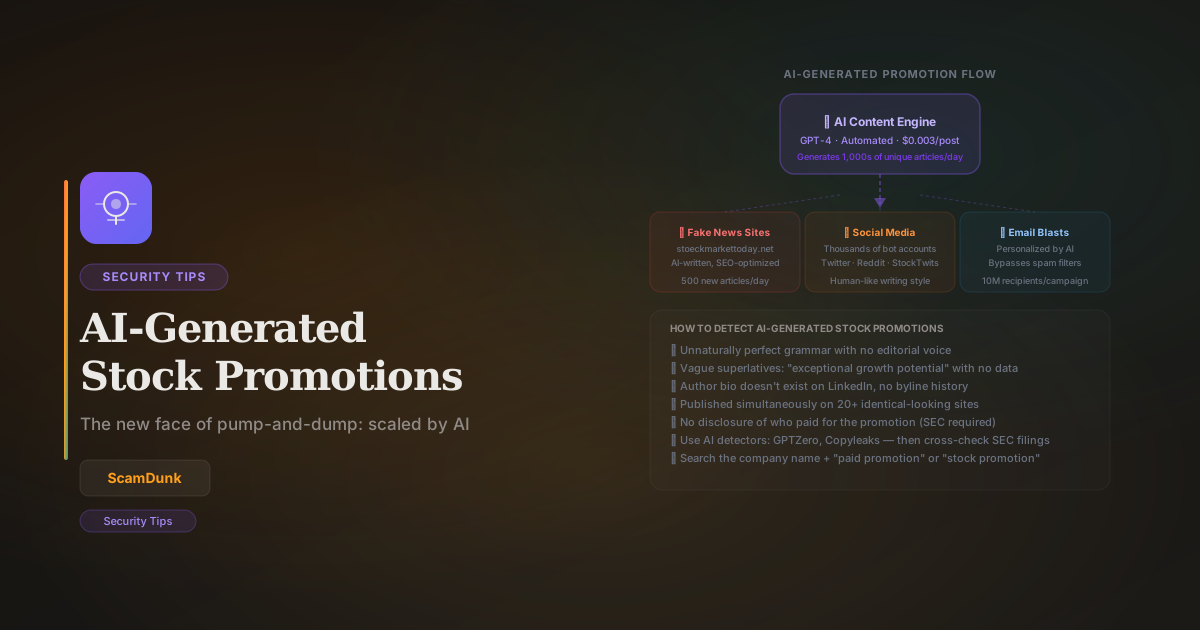
This blog post explores the rise of AI-generated stock promotions, which utilize synthetic media to manipulate market perceptions and promote high-risk stocks. It highlights the challenges these automated systems pose for detection and regulation, as well as the indicators investors should watch for to identify potential scams.
AI-generated stock promotion is the use of synthetic media, including AI-voiced videos, machine-generated scripts, and algorithmically produced "analysis" content, to promote stocks that exhibit manipulation risk signals. ScamDunk's social intelligence module has detected AI-generated promotional content on YouTube and other platforms targeting tickers independently flagged as high-risk by the platform's scan engine.
What AI-Generated Stock Promotion Looks Like
The promotional content follows a recognizable pattern. A YouTube channel publishes a video analyzing a micro-cap stock. The narration sounds professional but uniform. The voice is generated by a text-to-speech model. The script follows a template: open with "price breakout clearly visible," cite a technical indicator, name the ticker, and close with a bullish framing. The video is often under three minutes. Production quality is consistent across multiple uploads because the entire pipeline, script through narration through visual overlay, is automated.
ScamDunk's February 2026 social scans identified this pattern on channels promoting tickers that the platform had independently flagged as high-risk. The content was produced using notebook-style language model tools that generate scripts and synthetic voice output in a single workflow. View counts on individual videos ranged from single digits to low hundreds, suggesting the strategy prioritizes volume of content over per-video reach.
This is a departure from the influencer-driven promotion model that dominated 2020-2023. In that model, human promoters with established audiences served as the distribution mechanism. The new model replaces the human promoter with an automated content pipeline that can generate dozens of "analysis" videos per day across multiple channels, each targeting a different ticker.
How AI-Generated Promotion Fits the Manipulation Pipeline
AI-generated promotion operates at Stage 1 (Signal Seeding) and Stage 2 (Confidence Farming) of the ScamDunk Fraud Kill Chain.
Signal Seeding function. The videos create a discoverable trail of "analysis" for a ticker. When a retail investor searches for a stock symbol on YouTube, these videos appear alongside legitimate coverage. The presence of multiple analysis videos, even low-view-count ones, creates an impression of broader market interest. The AI-generated content does not need to persuade directly. It needs to exist as confirmatory evidence when a potential victim is already considering the stock based on a tip from a chat group, forum, or direct message.
Confidence Farming function. Channels that produce AI-generated content across many tickers benefit from the same survivorship dynamic that drives human confidence farming. If a channel publishes bullish analysis on 50 tickers and 8 of them happen to rise, the channel can point to those 8 as evidence of analytical skill. The 42 that did not perform are buried in the archive. AI generation makes this approach economically viable because the cost of producing each video is near zero.
Why AI-Generated Promotion Is Harder to Detect Than Human Promotion
Three structural features make AI-generated promotion a distinct challenge for investors and regulators.
Scale without identifiable actors. A single operator can run dozens of YouTube channels, each with a different synthetic voice and visual style. There is no face, no name, no personal brand to investigate. The channels can be created, used, and abandoned without reputational cost.
Plausible deniability through generality. The scripts typically reference real technical indicators (RSI, MACD crossovers, volume trends) applied to real market data. The "analysis" is superficially correct. This makes it difficult to classify as fraudulent promotion under existing securities law, which generally requires proof that the promoter knew or should have known that the information was misleading.
Volume dilution of enforcement attention. Regulators investigating social media-driven manipulation must prioritize. A single influencer with 500,000 followers promoting one stock is a clear enforcement target. A network of 40 AI-generated channels, each with under 100 subscribers, each promoting different tickers on different days, does not trip the same prioritization thresholds. The aggregate effect may be comparable, but the per-channel signal is weak.
What ScamDunk Detects
ScamDunk's social intelligence module scans public platforms for mentions of tickers that the risk-scoring engine has independently flagged. When a flagged ticker appears in promotional content on YouTube, StockTwits, Reddit, or other monitored platforms, the system records the source, content type, engagement metrics, and timing relative to the price and volume signals that triggered the original flag.
For AI-generated content specifically, the system notes content characteristics consistent with synthetic production: uniform voice quality across a channel's uploads, templated script structures, publication cadence that exceeds what a human analyst could sustain, and the absence of original research or verifiable sourcing.
ScamDunk does not determine whether specific promotional content constitutes securities fraud. The platform documents the co-occurrence of high-risk scan signals and social media promotion as a pattern indicator. The presence of AI-generated promotion alongside independently flagged risk signals is treated as a risk amplifier, increasing the composite assessment that the ticker is susceptible to coordinated manipulation.
What Investors Should Watch For
When evaluating stock analysis content on YouTube or other platforms, three indicators suggest AI-generated promotion rather than genuine analysis.
Production uniformity across a channel. If every video on a channel uses the same voice, the same script template, and the same visual format, regardless of the ticker being discussed, the content is likely generated rather than researched. Genuine analysts adapt their approach based on the specific characteristics of each stock.
Citation absence. AI-generated scripts reference indicators and patterns but rarely cite specific SEC filings, earnings transcripts, or named sources. The analysis sounds informed but is not traceable to primary documents.
Ticker overlap with high-risk scans. If the stock being promoted in a synthetic-media video also appears on ScamDunk's risk dashboard or exhibits the structural characteristics of manipulation targets (sub-$5 price, micro-cap, thin float, recent volume spike), the co-occurrence of AI promotion and high-risk signals warrants additional due diligence before acting on the promotion.
What This Pattern Suggests About the Manipulation Landscape
The emergence of AI-generated stock promotion represents an operational shift in how pump-and-dump infrastructure scales. Previous cycles required human promoters who could be identified, charged, and deterred. The Atlas Trading case, in which eight social media influencers were charged with $114 million in securities fraud, demonstrated that enforcement against identifiable promoters can work.
AI-generated promotion routes around that enforcement model. It replaces identifiable human promoters with disposable automated channels. It replaces persuasion-through-authority with confirmation-through-volume. And it reduces the per-ticker cost of promotion to near zero, making it economically viable to promote dozens of stocks simultaneously and profit from whichever subset moves.
This is not speculation about a future threat. ScamDunk's scans have detected this pattern operating on live tickers in February 2026. The infrastructure exists. The question is whether detection and regulatory frameworks adapt before the approach scales further.
ScamDunk identifies risk signals and patterns observed in historical manipulation cases. It does not allege wrongdoing or intent. This content is not investment advice.
Related: